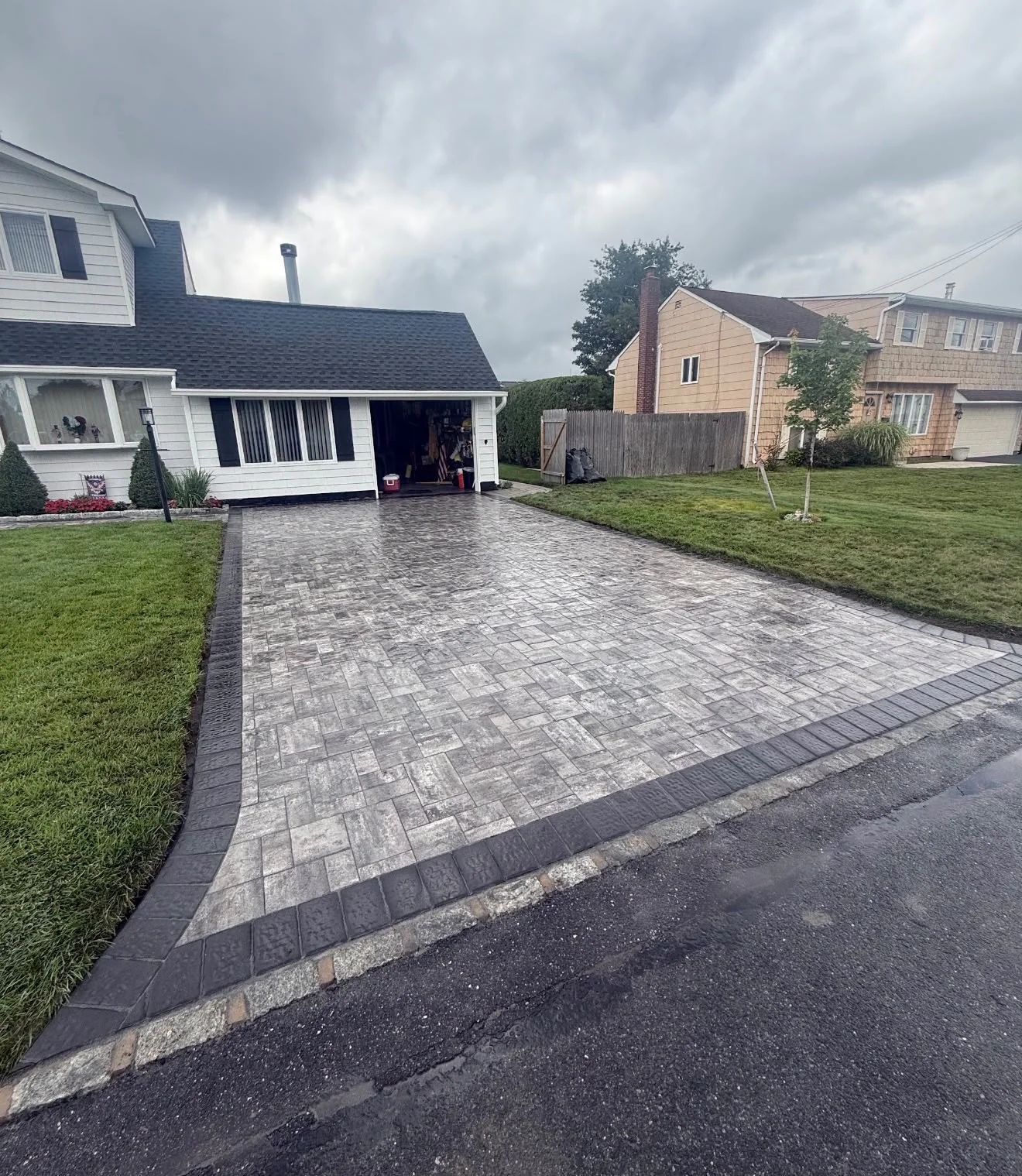
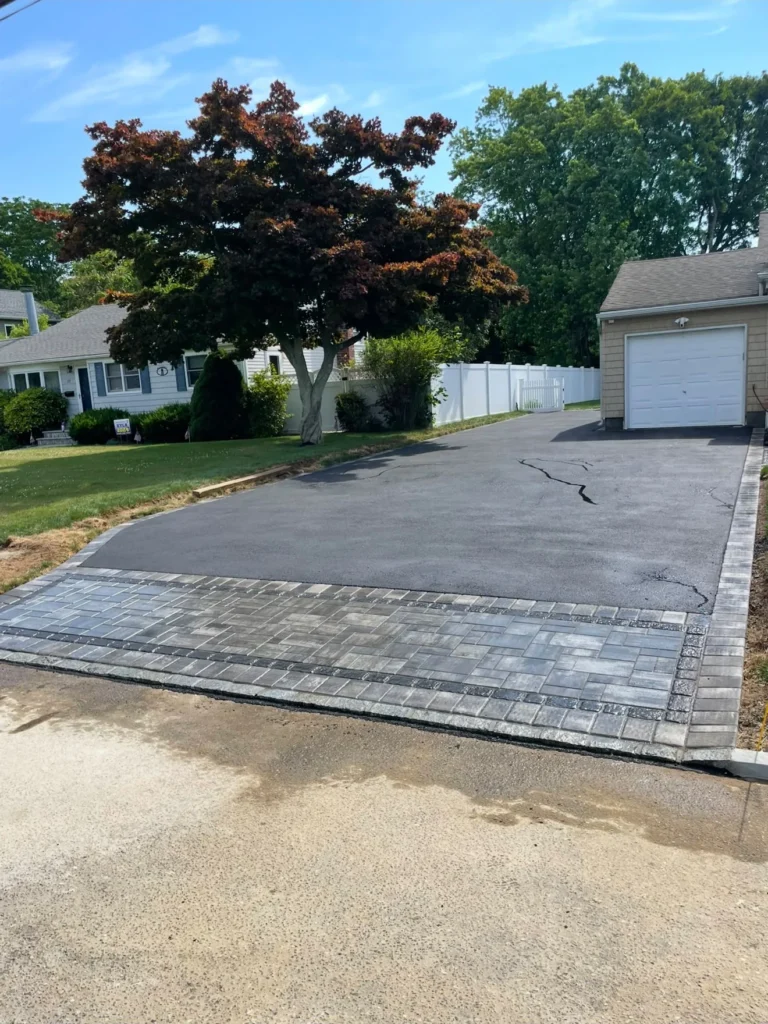
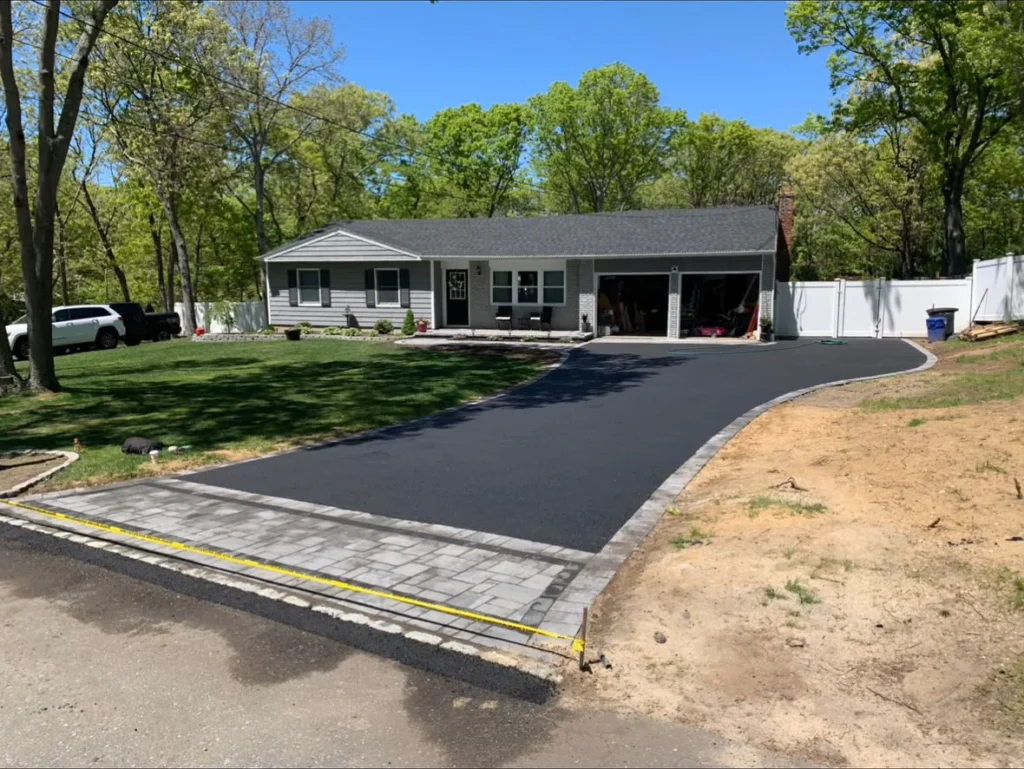
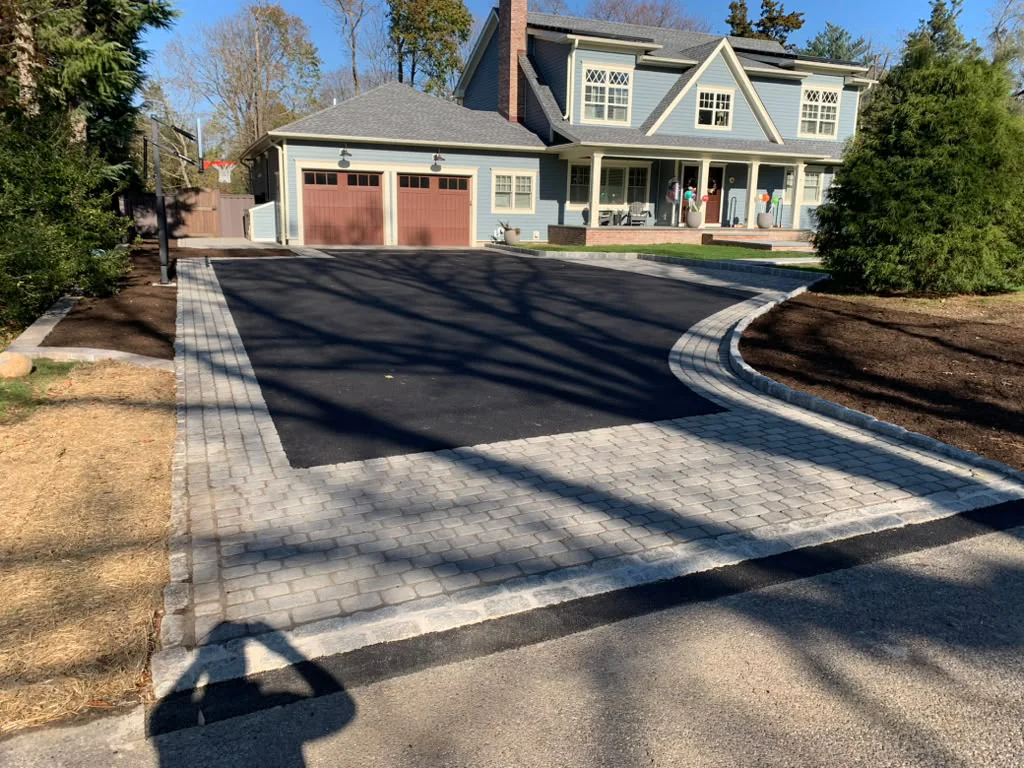
A paver driveway gives your home a high-end entrance that lasts for decades. StoneForge Paving & Masonry designs and installs concrete and natural stone paver driveways on an engineered base, so the surface stays level and tight through years of traffic and winter weather.
Why Choose a Paver Driveway
Interlocking pavers are strong, flexible and easy to repair: if one unit is damaged it can be lifted and replaced without patching the whole driveway. They come in many colors, textures and patterns, so the driveway can match the style of your home, and they handle freeze-thaw cycles and de-icing far better than poured surfaces.
Choose from concrete pavers, permeable pavers, clay brick and natural stone such as granite cobbles. Patterns include herringbone, running bond and basketweave, with contrasting borders and inlays available.
Cost depends on the driveway size, the paver style chosen, how much excavation and base material is needed, removal of the old surface, drainage requirements and any borders, aprons or steps. We provide a free written estimate after a site visit.
Our Paver Driveway Process
A paver driveway is only as good as what is under it, so most of our work happens before the first paver is laid.
Design Consultation — We help you choose pavers, colors and a pattern that suits your home.
Excavation — The old driveway and soft soil are removed to the right depth for vehicle traffic.
Engineered Base — Compacted crushed stone and a bedding layer are graded for drainage.
Installation — Pavers are laid, cut to fit, locked in with edge restraints and joint sand.
Compaction & Cleanup — The surface is compacted, cleaned and checked with you before we leave.
Herringbone, laid at a 45- or 90-degree angle, is the strongest interlocking pattern for vehicle traffic because it spreads turning and braking forces across many units.
Not when they sit on a well-drained, compacted base. Pavers move slightly as a flexible system, so they handle frost far better than a rigid slab that can crack.
Most concrete pavers tolerate de-icing salt, but calcium chloride or sand is gentler on the surface over time. We will point you to the right products for the pavers you choose.
Permeable pavers let rainwater drain through the joints into a stone reservoir below, which can help on properties with runoff problems. They need a deeper base, so we assess the site first.